The Making of a Mark
As I was designing the new website, I noticed something happening. Each part of the site seemed to be finding its own symbol, or as I like to call them, marks.
The Guiding Eye became an eye that blinks. The Studio found its iris and cloche. Even a swan with rippling water found a place on the Signet page. I wanted et Muse to have one too.
Whenever I begin a branding project, I start in the same place: the story. Before sketches, colors, typography, or logos, I want to understand what sits beneath the surface. What themes keep returning? What details linger? What is the thread running through?
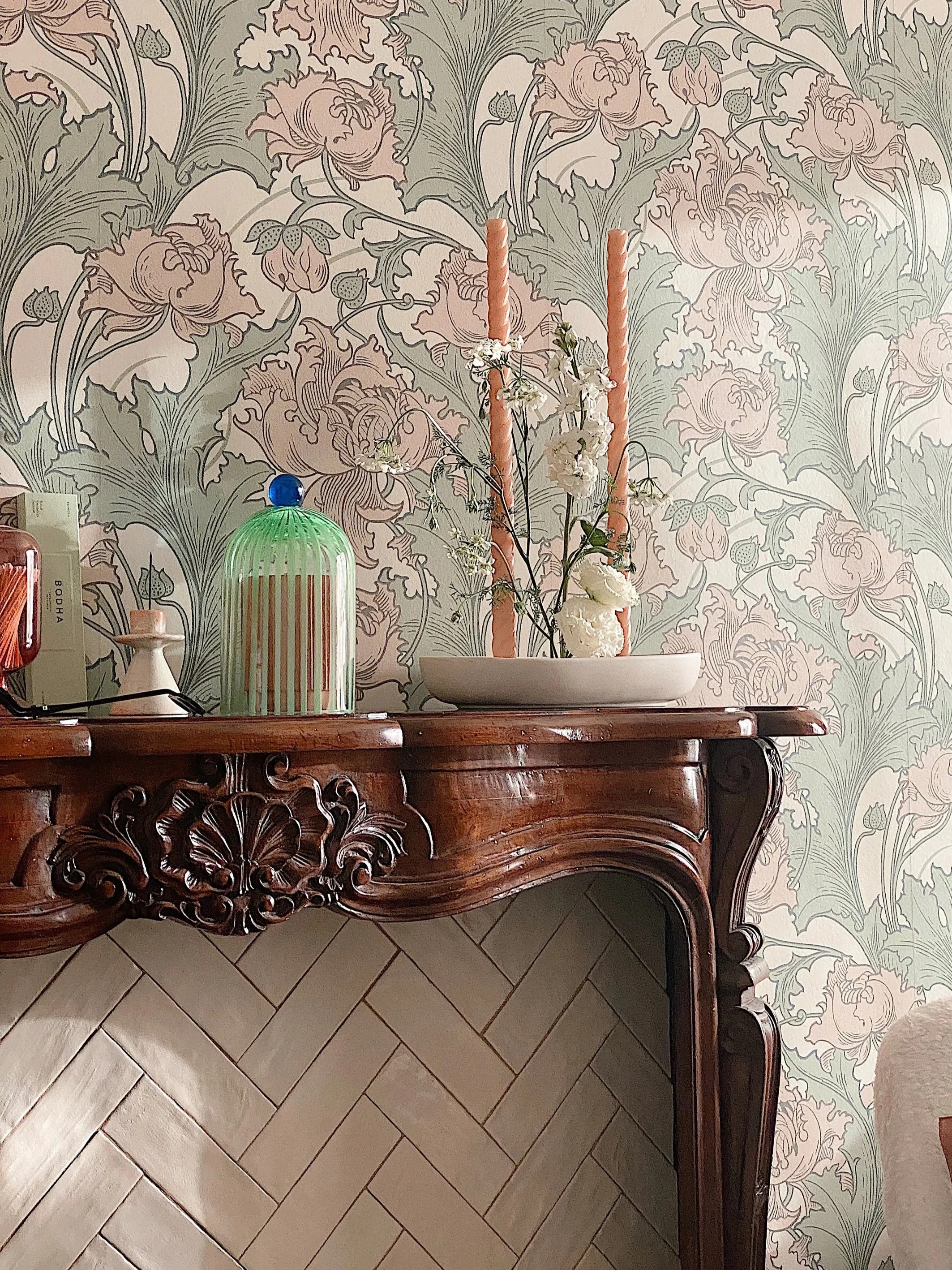
This time, I found myself asking those same questions about my own work. And almost immediately, my mind returned to my fireplace mantel.
While many of the interiors I admired at the time leaned bold, eclectic, or bohemian, I kept noticing something else entirely.
Ovals. Shells. Columns. Architectural ornament.
A softness and sense of history that felt different from anything I had been exploring before.
I had already stood in front of the real thing, in Paris, in Italy, and somehow hadn't connected the dots. It took something smaller and stranger to make it click. It was 2020. Everyone was home, hands needing something to do, and a few New York based content creators started installing fireplace mantels into apartments that never had fireplaces to begin with. I remember watching that and feeling something shift. Not because I wanted a fireplace. Because I finally understood what I had been drawn to all along, and why it had taken seeing it secondhand, on a screen, in someone else's apartment, to recognize what I had already walked past in person.
Then one afternoon, after months of searching, I found a listing for an Italian fireplace mantel. It moved me because it echoed everything I was beginning to fall in love with.
So I brought it home.
It has been my favorite piece of decor since. When I first started sharing it, a few people told me it felt different from my style. They weren't wrong, it was different from the other design elements I was working with and sharing. But now it was the most me thing I owned, I just hadn't let that side of my work be seen yet.
Whether it was standing in the living room or tucked into a different corner, I kept returning to it—not just the mantel itself, but the details. The curves. The shell. The feeling it carried.
When it finally came time to create a mark for et Muse, I found myself looking at those same details again, this time a little closer.
At first, I drew exactly what I saw. Then I simplified it. Eventually, I flipped part of the shape and discovered something unexpected. What had once been a piece of architectural ornament began to resemble a ribbon.
A frame. A flourish. A story unfolding.
The final mark still carries traces of the original mantel, but it has become something entirely its own—which is how I try to capture stories in design form.
Looking back, it feels fitting that et Muse would be represented by a symbol born from an object that taught me to look closer. In many ways, this mark is the result of that process: of noticing, collecting, and following a thread until the story reveals itself.